Technical sales work (security questionnaires, detailed API explanations, RFP responses) demands answers that are accurate, clear, and well-structured. To see which reasoning model holds up best on these tasks, we benchmarked two advanced models head to head, o3-mini and GPT-4o. This article breaks down the evaluation, the scoring methodology, and where each model pulls ahead. For the broader stakes behind these tasks, see how sales engineers answer security questionnaires without blocking on GRC.
Evaluation overview
We tested both models on tasks representative of technical sales scenarios and measured these dimensions.
- Accuracy, factual correctness (maximum 40 points)
- Clarity (relevance), precision and relevance to queries (maximum 30 points)
- Completeness, thoroughness of responses (maximum 30 points)
- Total score, overall performance (maximum 100 points)
- Latency, response time in seconds
Performance highlights
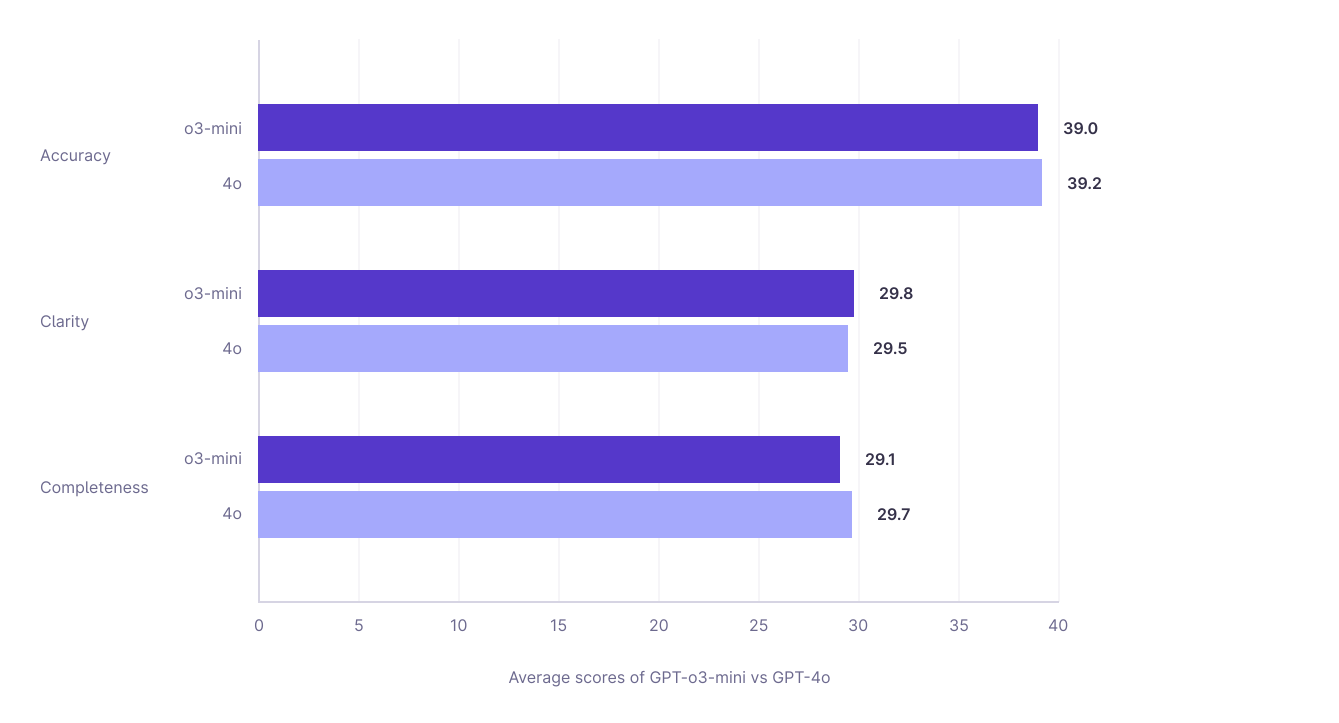
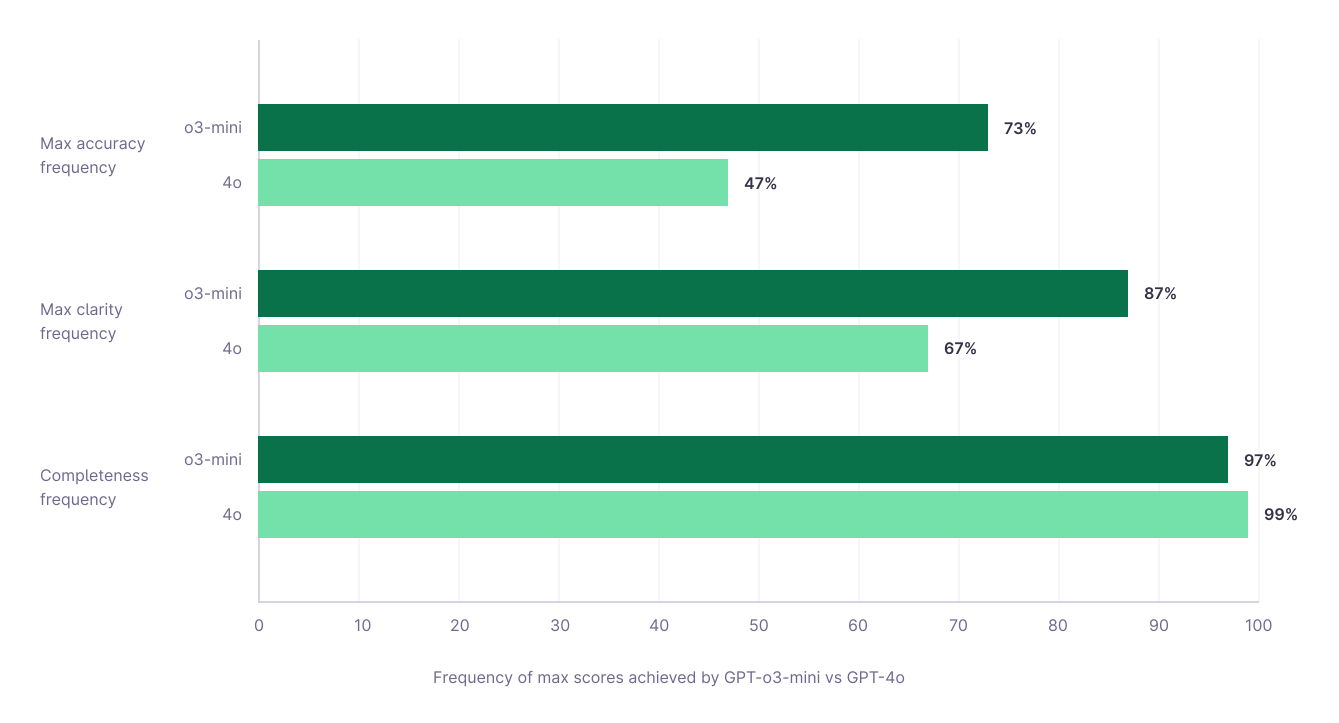
- Accuracy. GPT-4o averaged slightly higher at 39.2 compared to o3-mini’s 39.0, but o3-mini consistently reached the maximum accuracy score more frequently (73% vs. 47%).
- Clarity. o3-mini led with an average clarity score of 29.8 versus GPT-4o’s 29.5, with o3-mini achieving maximum clarity on 87% of tasks, significantly outperforming GPT-4o’s 67%.
- Completeness. GPT-4o slightly outperformed o3-mini (29.7 vs. 29.1), demonstrating fewer dips in completeness. o3-mini occasionally dropped scores slightly on complex inputs.
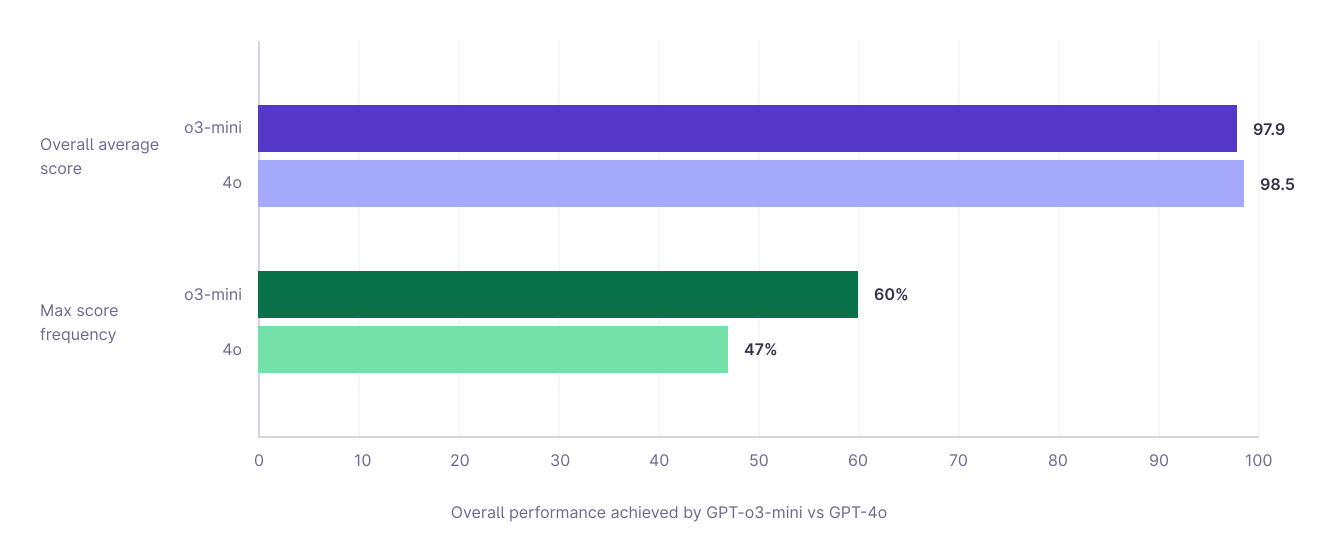
- Total Score. GPT-4o’s overall average was slightly higher (98.5 vs. 97.9), but o3-mini reached the maximum total score more often (60% compared to GPT-4o’s 47%).
Latency insights
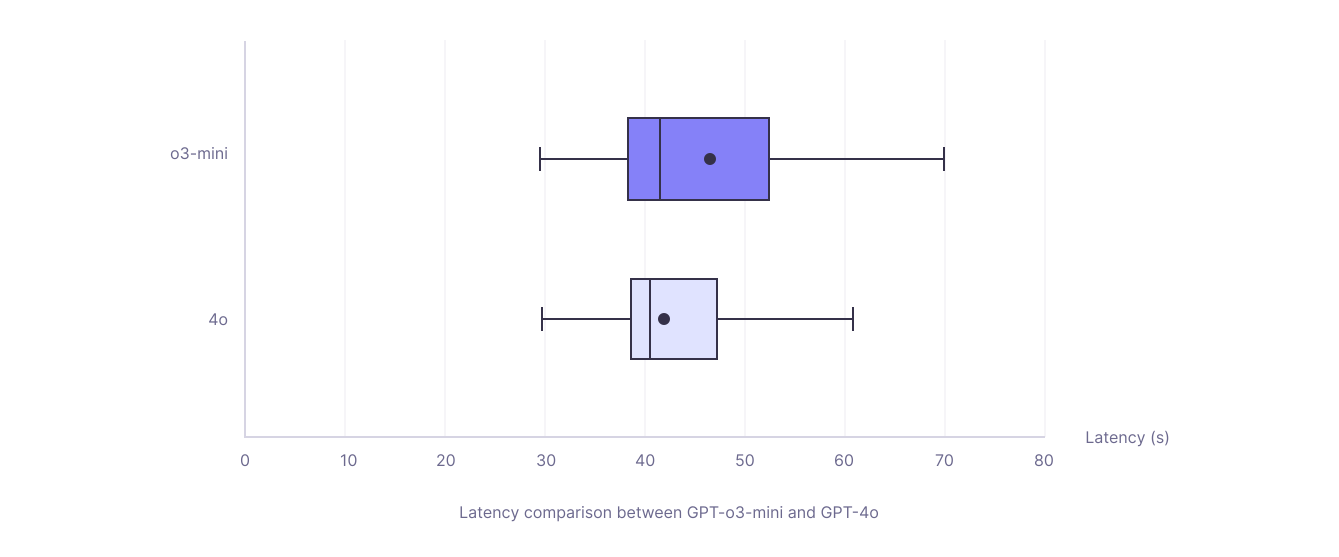
Surprisingly, GPT-4o was only marginally faster overall, averaging 42.7 seconds per response compared to o3-mini’s 46.5 seconds. The range of latency was wider for o3-mini (29.5–69.9s) than GPT-4o (29.7–60.8s), yet the median latencies were almost identical (41.3s vs. 41.5s).
Unique insights
- Peak performance. o3-mini excelled notably at the upper performance boundary, consistently hitting maximum clarity (87%) and accuracy (73%) more frequently than GPT-4o. However, its performance showed variability, especially on particularly challenging inputs, suggesting sensitivity to highly complex queries.
- Consistency vs. excellence. GPT-4o provided steadier results, rarely scoring below 94 total points. o3-mini, in contrast, demonstrated remarkable highs and occasional lows, reflecting a “high-risk, high-reward” profile.
Where o3-mini pulls ahead
o3-mini’s exceptional clarity and peak accuracy line up well with what technical sales work demands, which is concise, precise, and reliable answers. Its ability to consistently achieve maximum clarity and accuracy makes it particularly effective for high-stakes documents such as security questionnaires and technical queries, where precision directly impacts credibility and deal speed. That link between precision and deal speed is not anecdotal. How AI accuracy affects security questionnaire deal velocity quantifies how each wrong answer adds revision rounds.
The slight latency variability is a reasonable trade-off for that precision, and o3-mini’s leaner profile positions it well for high-volume technical sales workloads.
Conclusion
Both o3-mini and GPT-4o are highly capable reasoning models. For critical technical sales contexts, where precision and relevance directly shape credibility and deal speed, o3-mini’s consistency at the top of the scoring range gives it the edge in this benchmark. For how the next model generation performs on the same tasks, see our GPT-5 benchmark on questionnaire performance, latency, and cost. The model is only one layer, though. In production, citations, scope guardrails, and review workflow are what determine output quality, the criteria that define the AI agents worth trusting for security questionnaire automation.